
Hawaii’s unique environment — salt air, high humidity, intense UV exposure, and year-round warmth — makes choosing a home security system more complex than on the mainland. The fundamental choice in Hawaii comes down to professional installation and whole-home automation versus DIY flexibility and affordability. Vivint is the premium, professionally installed solution ideal for permanent homeowners who want a turnkey system with deep smart home integration. Ring, an Amazon-owned DIY system, offers flexibility with no long-term contracts, making it the go-to choice for renters and budget-conscious residents. In Hawaiian Beaches, 24% of residents rent, and with median income below the national average, affordability is key. While Ring dominates globally in sales volume, Vivint holds a premium niche for those seeking comprehensive automation.
Vivint Hawaii
Professionally installed smart security designed for island homes — reliable monitoring through heat, humidity, and coastal weather.
🌴 Get Your Vivint Quote Hawaii+1 888 784 0392
Ring on Amazon
Affordable DIY smart security — order online and set up quickly. Perfect for Hawaii renters and families who want flexibility without contracts.
🌺 Secure Your Home in Minutes2026 Alert: Honolulu requires annual alarm registration at $15 initially and $5 annually, with 3 free false alarms before $50 fines apply. Kauai charges $25 for a new permit and $10 annually, with $150 fines after 2 false alarms. If fines go unpaid, police may refuse to dispatch.
Vivint vs Ring Comparison Table for Hawaii Homeowners
| Factor | Vivint (Professional) | Ring (DIY) |
|---|---|---|
| Long-Term Support | 3.5–5 year contracts; high cancellation fees | Month-to-month. Cancel anytime |
| Cost & Value | Premium equipment cost; monitoring $29.99–$49.99/month | Affordable equipment; monitoring $19.99/month |
| Security Features | Full integration: locks, lights, thermostat, AI cameras, touchscreen panel | Modular: cameras, doorbells, sensors. App-controlled; Neighbors network |
| Privacy Worries | Data with Vivint; professional monitoring means human access | Amazon-owned; FTC fined Ring $5.8M for privacy violations |
| User Satisfaction | Expert rating 9.1–9.4/10; Trustpilot 4.2/5 | Customer rating ~4/5 |
| Internet Need | Cellular backup included; Z-Wave integration | Cameras need Wi-Fi; Alarm Pro has AT&T cellular backup |
Hawaii Google Trends Data Analysis
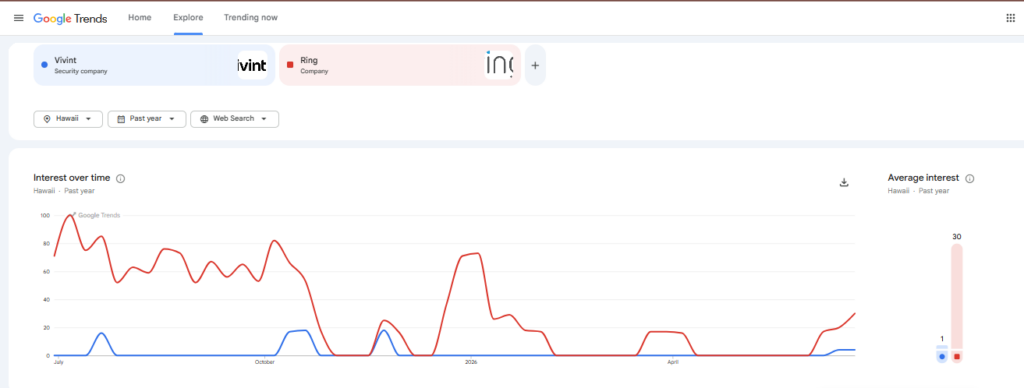
Based on the Google Trends data for Hawaii over the past year, Ring maintains a significantly higher average search interest than Vivint (30 vs. 1), reflecting its broader appeal as the affordable DIY option. The top queries for Ring include “ring camera” (+10%), “ring doorbell” (+8%), and “ring doorbell camera” (+40%), indicating that Hawaii consumers are actively researching both hardware and specific features. Interestingly, “ring app” searches dropped 20%, suggesting potential user frustration with the mobile application. Vivint searches show “vivint customer service” up 16% and “vivint login” as a breakout query, suggesting ongoing service-related inquiries from existing customers or potential users researching the company. The higher search volume for Ring aligns with the 24% rental population in areas like Hawaiian Beaches and the need for portable, budget-friendly systems.
| Search Metric | Ring | Vivint |
|---|---|---|
| Average Search Interest | 30 | 1 |
| Top Queries | Doorbell (+8%), Camera (+10%), Doorbell Camera (+40%) | Customer service (+16%) |
| Key Consumer Concern | App issues, subscription costs | Contract issues, service quality |
Warranty vs Homeowners Insurance for Vivint and Ring in Hawaii
| Factor | Vivint | Ring |
|---|---|---|
| Manufacturer Warranty | Limited; equipment defects | 1-year limited |
| Salt-Air Corrosion | Not covered | Not covered |
| Hurricane Damage | File homeowners claim | File homeowners claim |
| Insurance Discount | 5–15% with professional monitoring | 5–15% with Ring Protect Pro |
| How to Claim | Contact Vivint support | Contact Ring support |
In Hawaii, homeowners insurance is your primary protection against weather-related equipment damage. Neither Vivint nor Ring covers salt-air corrosion, hurricane damage, or flood damage under standard warranties. The average Hawaii homeowners insurance premium is approximately $1,102 per year. Security systems can qualify for a “secured home” discount averaging about 5% from many carriers, and bundling home and auto insurance typically saves 10–20%.
Hawaii Climate Impact on Security Hardware
Hawaii’s climate — salt air, humidity, UV exposure, and year-round heat — is one of the toughest in the U.S. for security hardware. Local experts warn that DIY systems “often fall short over time” in Hawaii, with cameras corroding “in just a year” due to salt air. Salt air corrosion is the number one threat, as sea salt particles in the air corrode camera housings, battery contacts, and wiring. Hardwired units are sealed more effectively against salt air than battery-operated units. Ring devices operate between -4°F and 122°F, but Hawaii’s intense sun can trigger Device Cooldown Mode. In temperatures above 104°F, prolonged exposure may cause thermal throttling or device shutdown.
| Device Type | Hawaii Recommendation | Why |
|---|---|---|
| Ring Battery | Not recommended | Salt air corrodes contacts; humidity drains batteries; heat triggers cooldown |
| Ring Wired | Best | Better sealed against salt air; more reliable |
| Ring Solar | Not recommended | Salt air damages panels; UV degrades plastic |
| Vivint Outdoor Cam | Good | Professional installation; more robust hardware |
| Vivint Smart Hub | Caution | Keep indoors; salt air damages electronics |
Critical Maintenance Tips for Hawaii Homeowners:
- Hardwired is essential, not optional. Salt air corrodes battery contacts and degrades electronics.
- Mount cameras under eaves to protect from rain and direct sun.
- Expect to replace outdoor cameras more frequently than mainland averages.
- Clean camera lenses regularly as salt deposits can obscure vision.
- Professionals who know local construction types, understand the climate, and can optimize network and camera placement are strongly recommended.
Which Security System Is More Popular in Hawaii?
Hawaii homes range from Honolulu condos to single-family houses in suburban areas and rural properties. Ring is more common in apartments and rentals due to high-density wireless portability constraints and affordability. With 24% of residents in Hawaiian Beaches renting and median income at $46,392, Ring’s affordability and optional monitoring make it the best choice for renters. Vivint is more common in houses and homeowner areas due to permanent suburban property layout requirements and professional installation.
Who wins in Hawaii? Ring wins by sheer market share and affordability, especially for renters. Vivint remains the superior choice for homeowners who want whole-home automation and professional installation.
Consumer Reviews and Buying Decisions
What Drives People to Vivint:
- Whole-home automation with smart locks, lighting, and thermostats
- Professional installation and 24/7 monitoring
- Expert ratings: 9.1–9.4/10
What Pushes People Away from Vivint:
- High upfront costs and long contracts (3.5–5 years)
- Vivint sensors are proprietary and do not work with other systems
- Past concerns over solar contracts and customer service
What Drives People to Ring:
- Affordable, camera-first security with no contracts
- Easy DIY installation and Alexa integration
- Neighbors app community security network
What Pushes People Away from Ring:
- Cameras need Wi-Fi; poor performance without internet
- Batteries degrade in Hawaii’s climate
- Amazon-owned with privacy concerns
Quick Decision Guide for Hawaii Homeowners
| Your Situation | Choose Vivint | Choose Ring |
|---|---|---|
| You own your home | Best for permanent installations | Works, but less integrated |
| You rent or may move | Long contract, hard to move | Portable, cancel anytime |
| You want professional installation | Included | DIY only |
| You are on a budget | High upfront cost | Low cost, pay as you go |
| You want whole-home automation | Locks, lights, thermostat, garage | Limited to Ring-compatible devices |
| You live in coastal Hawaii | More robust hardware | Hardwired needed for salt air |
Frequently Asked Questions About Vivint vs Ring in Hawaii
Do I need an alarm permit for my Ring or Vivint system in Hawaii?
In most counties, yes. Honolulu requires a permit at $15 initially and $5 annually. Kauai charges $25 for a new permit and $10 annually. Permits are not transferable and must be renewed annually. If you fail to add your permit to your Ring or Vivint app, police may not dispatch in an emergency. If fines go unpaid, police have discretion to not respond to future alarms at your site.
What are the false alarm fines in Hawaii?
In Honolulu: 1st-3rd false alarms are free; 4th+ cost $50 each. The 4th can be waived by completing a 2-hour alarm awareness class within 21 days. In Kauai: 1st-2nd false alarms are free; 3rd+ cost $150 each. Unregistered alarms incur additional $100–$250 fines.
Should I buy battery-powered or wired Ring devices in Hawaii?
Strongly recommend wired. Hawaii’s salt air and humidity can cause battery-powered devices to corrode and fail within 1-2 years. Hardwired devices are better sealed against the elements. Local experts state that “Hawaii isn’t a plug-and-play market” and DIY systems often fail over time.
Can I get a homeowners insurance discount with Ring or Vivint in Hawaii?
Yes, but only with professional monitoring. Insurance companies offer a “secured home” discount averaging about 5% for homes with burglar alarms or fire extinguishers. A Ring doorbell or camera alone does not qualify. You must submit your monitoring certificate to your insurer. Bundling home and auto insurance typically saves 10–20%.
Does Ring’s cellular backup work in Hawaii?
It depends on AT&T coverage. Ring Alarm Pro uses AT&T. AT&T has invested in Hawaii with 14 new FirstNet and disaster recovery assets across Oahu, Kauai, Maui, and Hawaii Island. However, coverage gaps exist in remote areas. In a power outage, cellular backup keeps the alarm system online — but cameras still need Wi-Fi to stream video.